
Industry Applications

Engine System

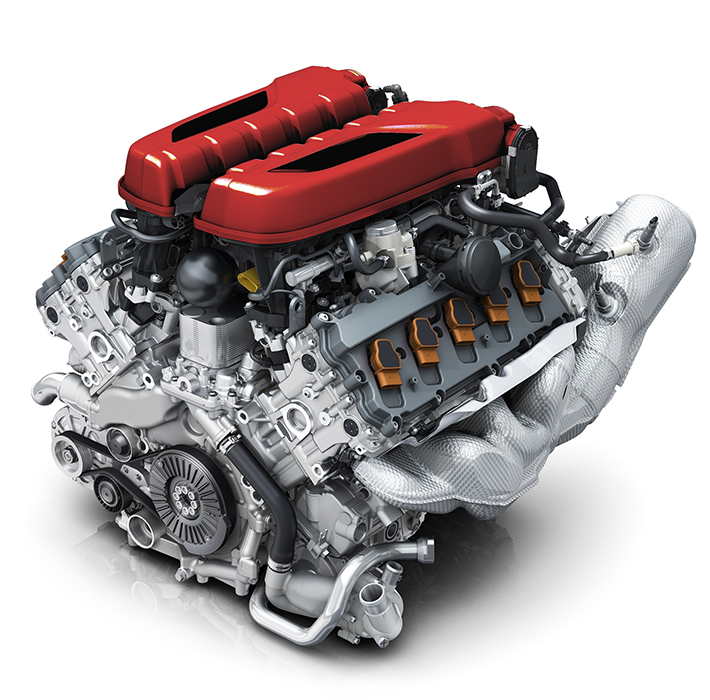
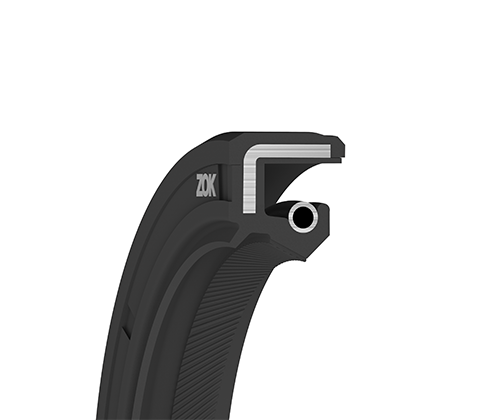
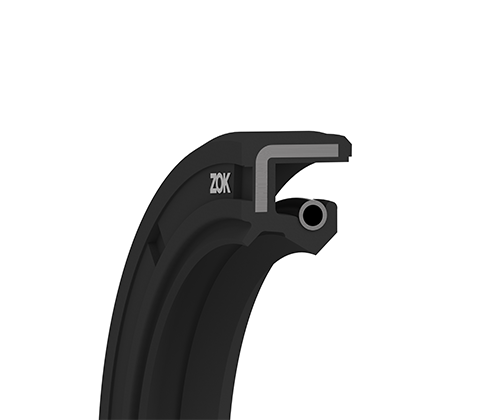
Oil seals are primarily employed in engine systems for sealing rotating shafts. Their elastic sealing lips, in conjunction with self-tightening springs, form a dynamic sealing interface by tightly conforming to the shaft surface. This prevents lubricant leakage and isolates external contaminants from infiltrating core components such as crankshafts and valve stems. Taking crankshaft front and rear oil seals as an example, these typically employ a dual-lip fluorocarbon rubber construction (TC type). The primary lip prevents engine oil leakage that could contaminate the environment or infiltrate the combustion chamber, while the secondary lip intercepts dust and moisture, averting bearing dry friction and seizure caused by lubricant loss. Valve oil seals are particularly critical, precisely regulating oil flow at the valve guides. This prevents excessive oil ingress into the combustion chamber – which causes blue smoke from the exhaust, spark plug fouling, and power loss – while ensuring minimal oil lubricates the valve stems to maintain smooth valve train operation. Furthermore, the shaft ends of auxiliary components such as the oil pump and water pump similarly rely on oil seals to maintain sealing integrity. Failure here can lead to insufficient lubricating oil pressure, accelerating wear on piston rings and cylinder walls, or even causing cylinder scoring.

Product Application

Material selection directly impacts service life: High-temperature conditions at the crankshaft necessitate fluorocarbon rubber (FKM) with heat resistance up to 200°C, while valve oil seals must also withstand fuel corrosion. Standard nitrile rubber (NBR) tends to harden and crack at elevated temperatures, increasing the risk of seal failure. During installation, pre-lubricate the lip and press-fit vertically to prevent lip tearing from uneven wear. Following periodic inspections for ageing cracks, replace with OEM-standard parts featuring metal reinforcement to ensure sealing reliability.

Failure consequences are severe: oil leakage not only pollutes the environment but also causes crankshaft bearings to seize due to lubrication loss. External dust ingress accelerates wear on precision components like camshafts, triggering engine noise or power reduction. Thus, though diminutive, engine oil seals serve as pivotal "gatekeepers" safeguarding lubrication system purity and pressure stability.
Solving your equipment sealing challenges

Contact us, and we shall promptly provide you with customized oil seal solutions through our expertise and capabilities.

Contact Us

Hotline

+86-573-87258288

Contact

Top